

How to Choose Your First At-Home Workout
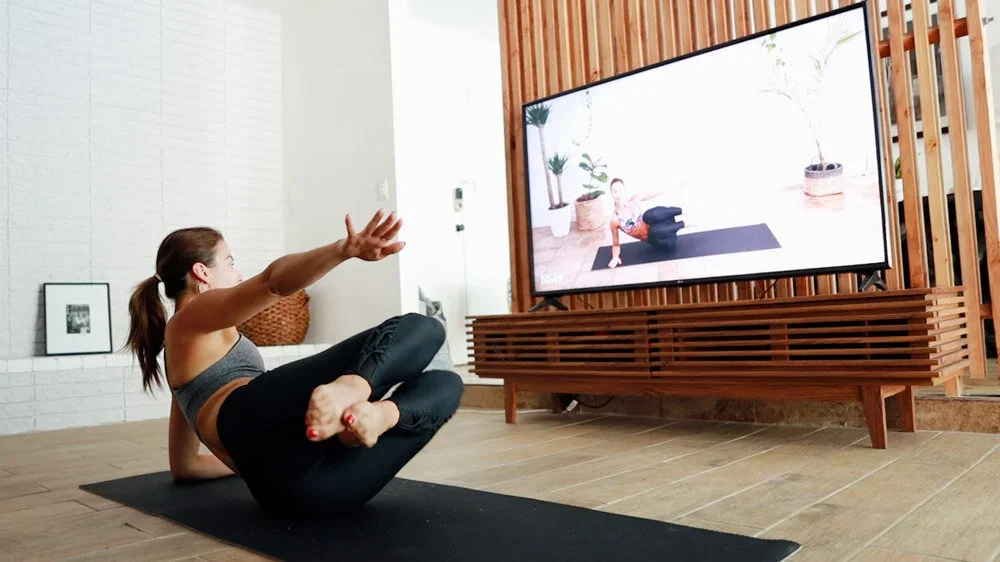
Photograph: Ed Gregory. Original Dance Toned image.
You have a little time, somewhere to move and a screen ready to go. Then the choice begins: a short session, a longer class, something for your core, something that looks fun. Before you know it, you have spent your workout time deciding what to watch.
Your first at-home workout does not need to settle your whole fitness plan. Give it a smaller job: help you find a starting point that suits you today. You can learn whether you like the teaching style, whether the movements feel manageable and whether the session fits your day. Those are useful answers, even if you decide to try something different next time.
The aim is to choose deliberately, start realistically and leave yourself a clear next step.
Choose for where you are today
If you are new to exercise or returning after a break, look at the beginner options first. A familiar movement in a video can still feel different when it is part of a longer sequence. Choosing a starting level is a practical decision, not a judgment about how fit you ought to be.
The National Institute of Diabetes and Digestive and Kidney Diseases recommends beginning gradually and choosing activities you enjoy when starting physical activity. That is a useful basis for your first choice: something approachable enough to try, with a style you are interested in doing again.
If a health condition or disability affects your activity choices, ask a health professional which activities and amounts are appropriate for you. A workout label cannot answer that individual question.
You do not need dance experience to explore Dance Toned. The Dance Toned experience is built around follow-along home workouts with different levels. Start by considering the level and format, rather than assuming that the brand name means you need to learn choreography.
Preview the session before committing
A title and thumbnail are only a first impression. Read the description, then preview enough of the video to understand what you are choosing. Can you see the instructor clearly? Does the explanation make sense to you? Is the session mainly standing, on the floor or a mixture?
Look for information about equipment, space and the movements involved. If you need an easier option, check whether the instructor explains one. Do not assume that every video offers the same adjustments, or that a short class must be easy.

Original Dance Toned workout photograph. Choose a session by its level and instructions, rather than its thumbnail alone.
You might enjoy an upbeat presentation, or prefer a calmer pace with more explanation. Notice that preference. The session needs to work for the person following it, not simply look impressive on the screen.
Make the time and space work for you
Choose a session that fits the time you actually have. Allow room to set up, understand the instructions and finish without rushing into your next appointment. If you have a small gap before a call, a shorter option may be the more realistic choice. Save the longer session for a day when you can give it your attention.
Before pressing play, check the area you will use. Move obstacles out of the way and position your screen so you can follow it comfortably. Read the session's requirements before deciding that your available space or equipment is enough.
Short activity sessions can contribute to a broader routine. The CDC's adult activity recommendations allow activity to be spread across the week. For adults, the general target combines at least 150 minutes of moderate-intensity aerobic activity, or an equivalent amount of vigorous activity, with muscle-strengthening activity on at least two days.
One short video does not automatically meet those recommendations. Its role depends on what you do, the effort involved and the rest of your week. Think of your first session as a starting point, rather than a complete answer to every fitness goal.
Use the first session to make a better second choice
Afterwards, give yourself a moment to reflect before searching for the next workout. You do not need a dramatic result to learn something useful. Ask:
Could I follow the instructions without feeling rushed?
Did the level and format suit my current starting point?
Was the available time and space enough?
Which part did I enjoy, and which part would I change?
Would I choose this session again, or try a different beginner option?

Photograph: Ed Gregory. Original Dance Toned image. A pictured exercise is not a recommendation for every beginner.
Your answer might be “the class was right, but the timing was wrong.” In that case, changing the appointment could be more useful than changing the workout. Or you may find that you prefer standing sessions to floor-based ones. Use that information when you browse again.
Give yourself a clear next step
Choose when you will return, then put it somewhere you will see it. “Try the same beginner session after work on Thursday” is easier to act on than “work out more.” Treat the appointment as something you can adjust thoughtfully if your circumstances change.
You can also use a trial period to explore the teaching style and available options. The seven-day Dance Toned trial gives you a chance to see whether the experience fits your preferences. Read the current checkout terms, including automatic renewal and cancellation timing, before signing up.
Start with one considered choice. Pay attention to how it fits. Then use what you learn to choose the next session with a little less uncertainty.
Images are original Dance Toned website photographs, reused with permission and without AI alteration.