


Original Dance Toned workout photograph. A thumbnail cannot tell you how demanding a session will feel to you.
The instructor is smiling, the music is upbeat and the class looks manageable. A few minutes later, you are working harder than you expected. Does that mean you chose badly, or that everyone else finds exercise easier?
A video gives you a view of someone else's movement. It cannot show your own level of effort. When you choose cardio at home, it helps to separate the presentation on screen from what the activity asks of you.
There is no single intensity that every reader should aim for in every session. Your starting point, health and activity plan matter. What you can do is learn the language of effort, then use it to describe your experience more clearly.
Start with your effort, not the instructor's expression
Cardio is often used as shorthand for aerobic activity. The CDC’s explanation of relative intensity describes how demanding an activity is for the person doing it. The same activity can be vigorous for one person and moderate for someone fitter.
That is a useful distinction when a class is called “easy” or an instructor appears relaxed. Those impressions do not measure your response. You also cannot hear your own breathing by watching the person in the video.
Read a level label as information about the class, rather than a verdict on you. If it does not fit your experience, be specific about the mismatch. Was the pace too demanding? Were the instructions too quick? Did the sequence require movements you could not follow? Each answer points to a different reason to reconsider the choice.
Imagine two people following the same recording in different homes. They might describe it very differently afterwards, even if neither changed the playback speed. Choosing a suitable level begins with noticing your own experience, not deciding which person is doing it “properly”.
Use speech as a clue about aerobic effort
CDC offers the talk test as a rule of thumb: at moderate aerobic intensity, you can speak but would struggle to sing. At vigorous intensity, you can manage only a few words before needing a breath. It is a simple cue to help describe effort, rather than a requirement to reach the harder category.
You do not need to perform a song alongside the workout. The point is to pay attention to how readily you can speak. A clear everyday description can be more useful than “that class was hard”, which might mean several things.
Keep this cue in its place. It describes aerobic effort; it does not tell you whether a movement is appropriate for an injury or whether your technique is correct. Being able to talk is not clearance to ignore pain, and struggling to speak is not an achievement you need to chase.
If a professional has given you individual activity advice, follow that advice. A general article cannot set your personal exercise intensity or replace an assessment.
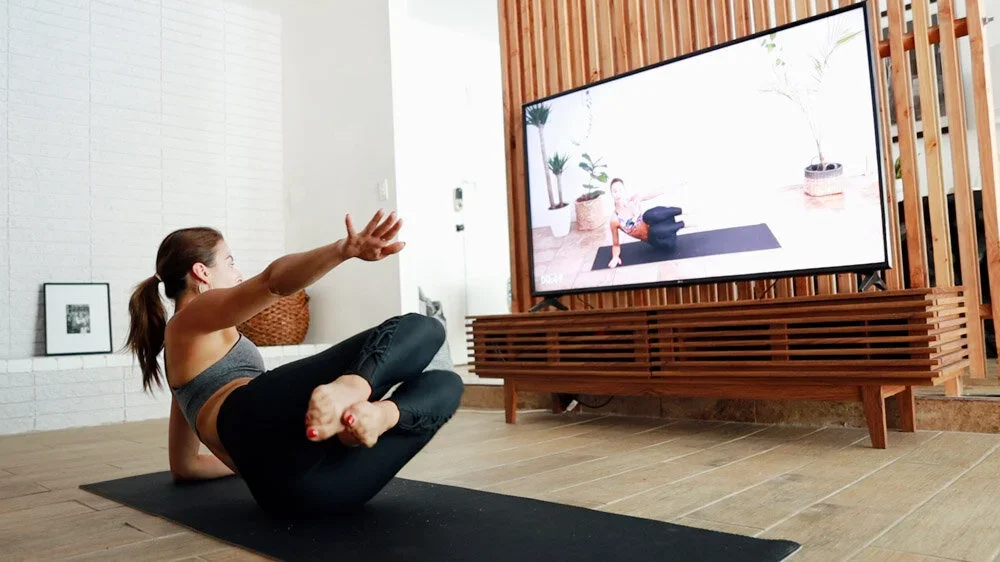
Photograph: Ed Gregory. Original Dance Toned image. Your experience of a follow-along session matters alongside the demonstration.
Separate breathing effort from learning the sequence
A new combination can take concentration. You might lose track of which side moves next while still finding the physical effort manageable. Alternatively, the movements may be familiar but the aerobic effort may feel too demanding for your intended session.
Those are different problems. Replaying an explanation can help you understand what was said. It does not automatically make the physical demand appropriate. Equally, choosing a more familiar sequence may make the class easier to follow without telling you anything certain about its intensity.
Before you decide that you need a harder or easier class, name what you want to change. Perhaps you want fewer transitions, more explanation or an option with a more manageable pace. Look for that information in the description and preview, rather than relying on a dramatic thumbnail or a short running time.
There is room to enjoy the music and teaching style while making a considered choice. You do not have to select the most complicated sequence to make your workout time worthwhile.
Do not use one kind of effort to measure everything
A demanding floor exercise and a continuous cardio section can both require effort, but they ask different questions of you. Breathlessness alone does not establish that a session covers your strength needs. For that distinction, read about strength work at home.
The photographs here illustrate company workouts, rather than a prescribed cardio routine. A still image cannot show a session's full format or establish that its pictured position suits every reader.
The NHS exercise-video safety advice says to seek professional advice when you are unsure of suitability or have relevant health concerns. It also says to stop if you feel pain or become unwell. A general level label or talk cue should never override those considerations.

Photograph: Ed Gregory. Original Dance Toned image. A challenging position does not, by itself, describe aerobic intensity.
Leave with a more useful description
After a suitable session, try separating your observations:
Breathing: could I speak readily, or did I need pauses for breath?
Understanding: could I follow the instructions and changes of direction?
Preference: did I enjoy the format enough to consider it again?
Next choice: what specific feature would I keep or change?
These are reflection prompts, not a fitness score. “I liked the teaching, but I need a different pace” is useful information. So is “the effort suited me, but I would prefer a simpler sequence”.
Explore the Dance Toned experience if you enjoy following workouts at home. When considering your next cardio session, bring your own observations with you. The aim is to choose with a clearer understanding of effort, rather than trying to look as relaxed as someone on a screen.
Images are original Dance Toned website photographs, reused with permission and without AI alteration.