


Original Dance Toned workout photograph. A still image cannot show how a session prepares you for movement.
You have a workout ready, a clear patch of floor and enough time before your next commitment. The opening minutes begin slowly. It can be tempting to skip ahead to the part that looks like the “real” workout, then add a quick stretch at the end if there is time.
Before you do, give those opening and closing minutes a little more attention. A warm-up and a held stretch have different jobs. Understanding the difference helps you follow the session with a clearer idea of what you are doing, without needing to become as flexible as the person on screen.
This is a way to think about your session, rather than a set of exercises to copy. The right movements and starting point depend on you.
Give the opening minutes a purpose
Think of a warm-up as preparation for the activity ahead. It deserves a place in the session, rather than being treated as spare footage before the music picks up.
The NHS warm-up guidance provides a general routine before more rigorous exercise. It also makes clear that general exercise videos are not treatment for a particular cause of pain or a medical condition.
When you follow a home workout, listen to what the opening instructions ask you to do. Is the instructor explaining the movement before increasing the demand? Can you follow that introduction at your current level? If you join a video partway through, you may have missed information as well as movement.
For example, imagine saving a favourite class at the point where its main section begins. The shortcut is convenient, but it leaves a question unanswered: what preparation did the earlier section include? Return to the beginning and check, rather than assuming a quick stretch will serve the same purpose.
Understand what a held stretch is doing
Flexibility work concerns your available movement. A held stretch is familiar: you move into a position and stay there for a period, rather than repeatedly moving through it. That is different from gradually starting the activity you are about to do.
Mayo Clinic’s stretching advice says not to treat stretching as a warm-up. It recommends warming the muscles first and using smooth movements without bouncing. A stretch should create tension, not pain.
That distinction is useful at home, where a video title may say “stretch”, “flow” or “mobility” without explaining its whole format. Read the description and listen to the introduction. A label alone does not tell you whether you will be holding positions, moving continuously or combining different kinds of activity.
You do not need to turn this into a vocabulary test. Ask a simpler question: am I preparing for the next activity, following the main session or spending time on a stretch? Knowing the purpose is more helpful than trying to make every part look equally demanding.
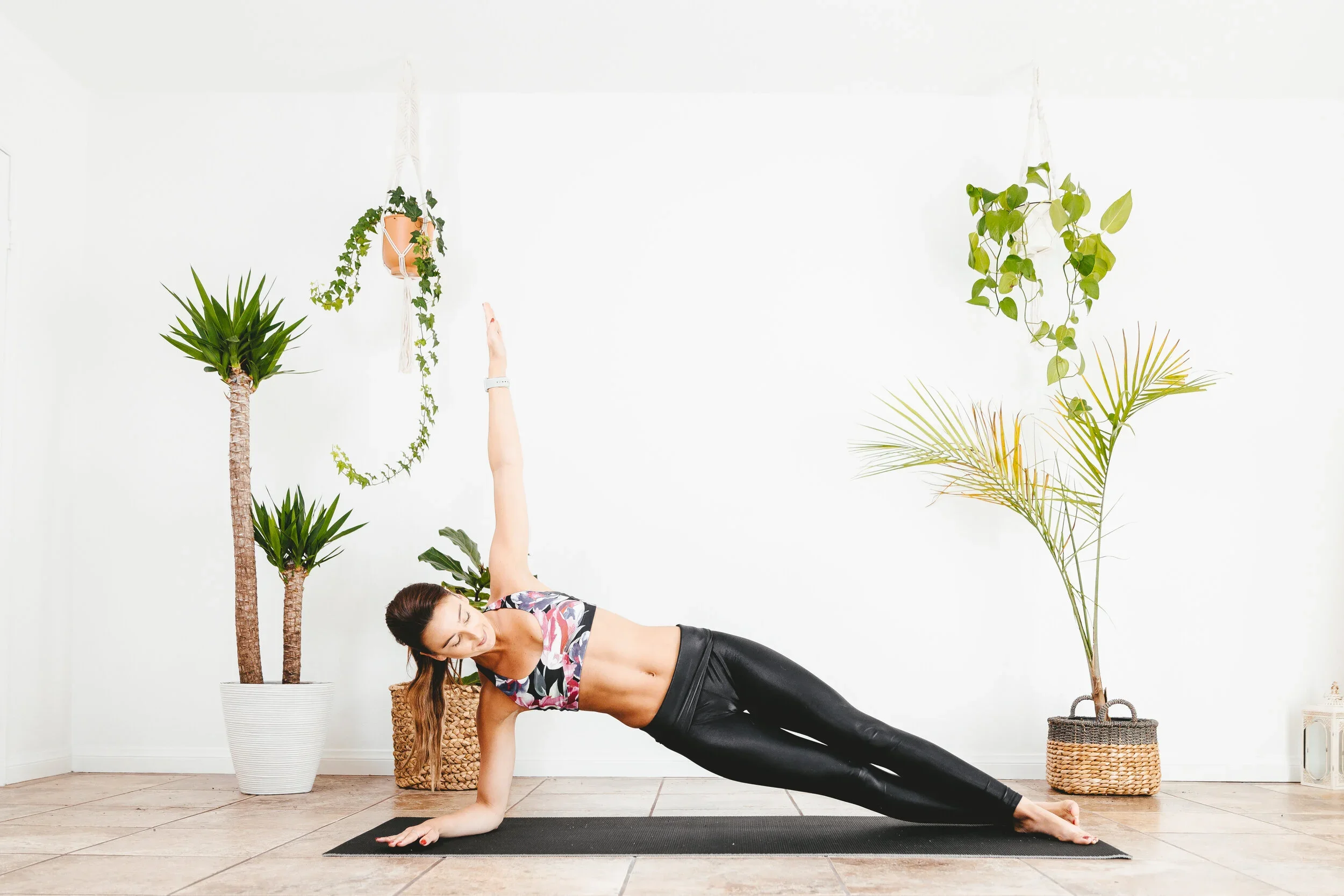
Photograph: Ed Gregory. Original Dance Toned image. This workout position illustrates why a still photograph should not be read as a stretching instruction.
Leave room for the finish
Look at the whole running time before you start. If you have an appointment immediately afterwards, choosing a session that fills every available minute can leave you rushing its ending.
Preview the final section when you are deciding how the workout fits your day. Does it include a gradual finish? Are there stretches you will need space or support to follow? You can check those practical details before you are trying to hear an instruction while looking for somewhere to put your screen.
An ordinary example is a class ending on the floor when your screen is high on a shelf. The movement may be explained clearly, but the viewing angle may still be awkward for you. Arrange the setup beforehand, or choose a suitable session whose positions you can follow comfortably. There is no benefit in making the setup a puzzle halfway through.
Treat the ending as part of the time you have chosen to spend. If the whole session does not fit, look for an appropriate shorter option instead of automatically removing its beginning or finish.
Keep your own movement in view
The instructor's range is not a target you must match today. A photograph shows one person in one moment; it cannot tell you what a position feels like or whether it is appropriate for your body.
Mayo Clinic advises speaking with a doctor or physical therapist about stretching when a health concern or injury affects it. NHS guidance says to stop exercising if you feel pain or become unwell. Seek individual advice if you are unsure what is suitable, rather than forcing a movement to keep up with a screen.
You can also pause simply because an instruction was unclear. Rewind the explanation, check what was asked and decide whether you need a different option or help. Pausing a video is an available tool, not a sign that you have failed the session.
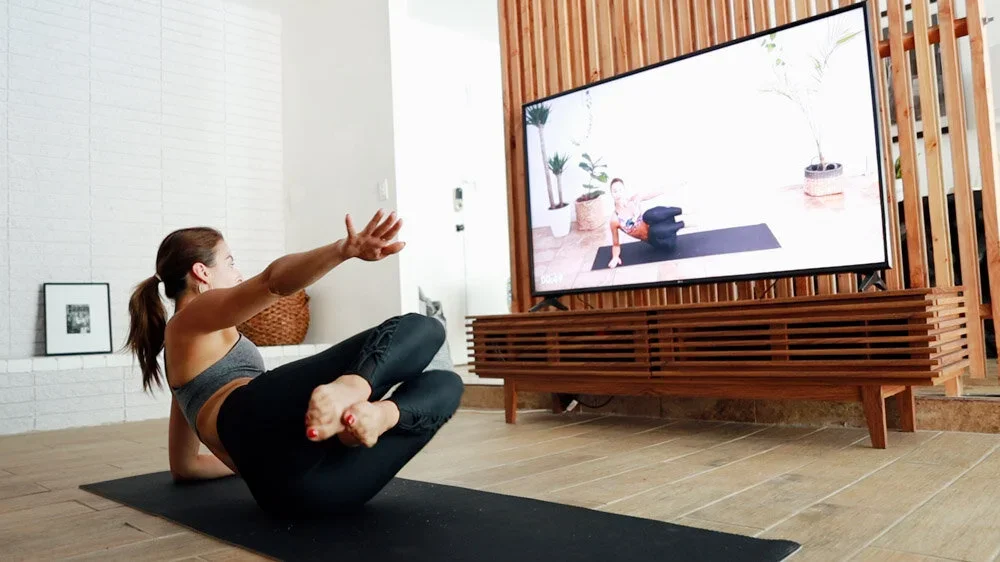
Photograph: Ed Gregory. Original Dance Toned image. Position your screen so the instructions remain useful throughout the session.
Make the whole session easier to follow
Before your next home workout, check:
What preparation is included at the beginning?
Where does the main activity start and finish?
Are any stretches explained, including how to approach them?
Have I allowed time and space for the whole session?
Keep the answers practical. You might discover that the class fits well once you move the screen, or that another format better suits the time you have. For the wider week, use a home workout plan you can return to.
Explore the Dance Toned experience if follow-along home workouts appeal to you. As you browse, give the introduction and ending the same attention as the main activity. A clearer understanding of the whole session is a useful place to begin.
Images are original Dance Toned website photographs, reused with permission and without AI alteration.